


Gemini
Project Gemini, 1965 and 1966: the first American spacewalk, the first rendezvous in orbit and the first docking. Ten crewed flights, two astronauts at a time, practising what Apollo would need.

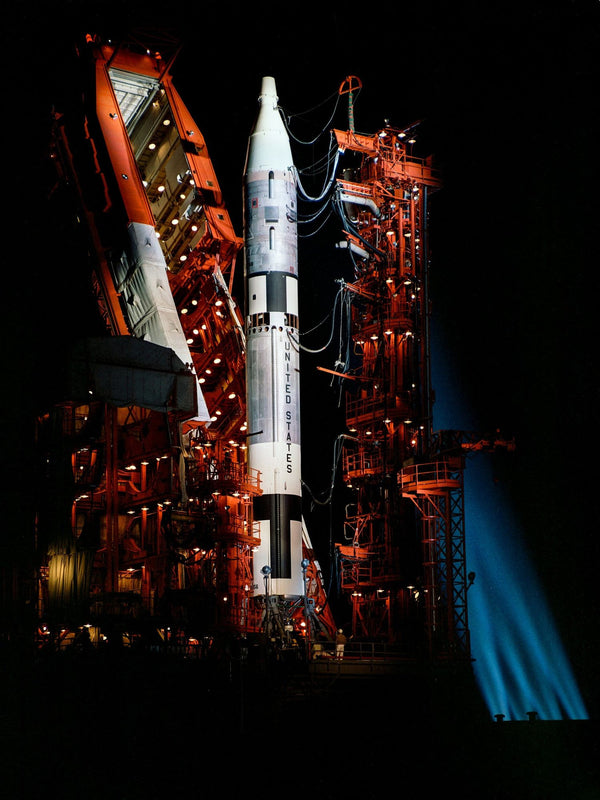


Project Gemini, 1965 and 1966: the first American spacewalk, the first rendezvous in orbit and the first docking. Ten crewed flights, two astronauts at a time, practising what Apollo would need.
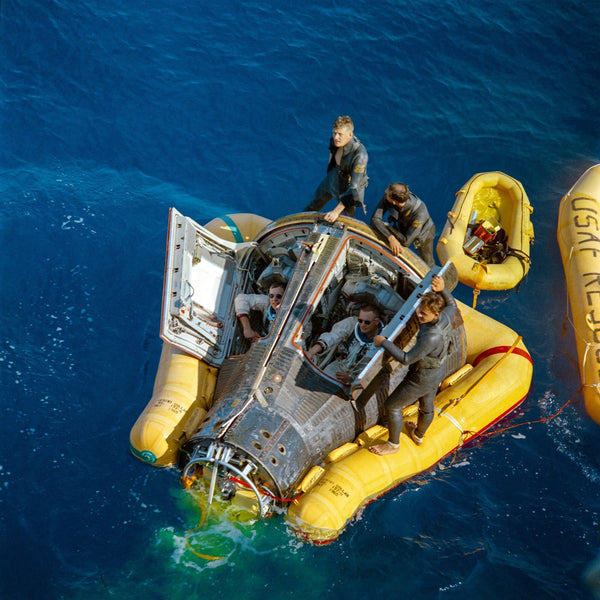
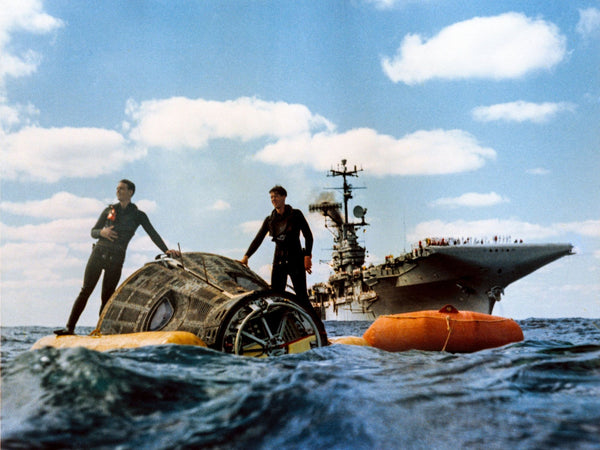
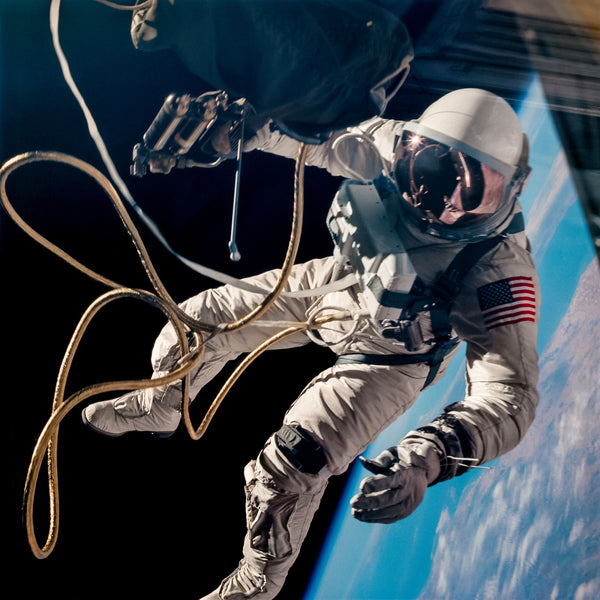
Mercury proved a person could survive space. Gemini had to prove a crew could do the work a Moon landing would demand. NASA set four goals, and Apollo needed every one: stay in orbit for up to fourteen days, longer than any trip to the Moon and back; walk in space; meet and dock with an uncrewed Agena target, launched ahead of the crew on its own rocket; and come down on a precise splashdown point. Across 20 months and ten crewed flights, the programme worked through them all. Ed White walked in space for 23 minutes in June 1965. That December, Wally Schirra and Tom Stafford flew Gemini 6A to within a foot of Gemini 7, the first meeting of two crewed spacecraft. In March 1966 Neil Armstrong made the first docking in orbit, then brought Gemini 8 home after a stuck thruster set it spinning. Buzz Aldrin closed the programme that November with three spacewalks totalling five and a half hours. When Gemini 12 splashed down, every step Apollo needed had been taken.
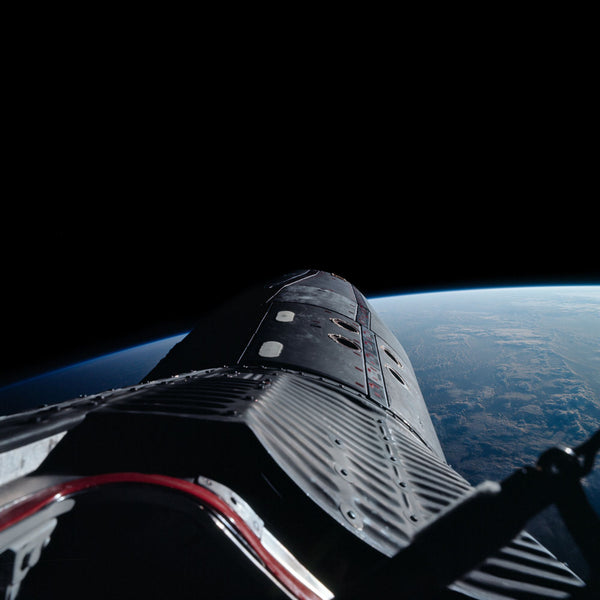
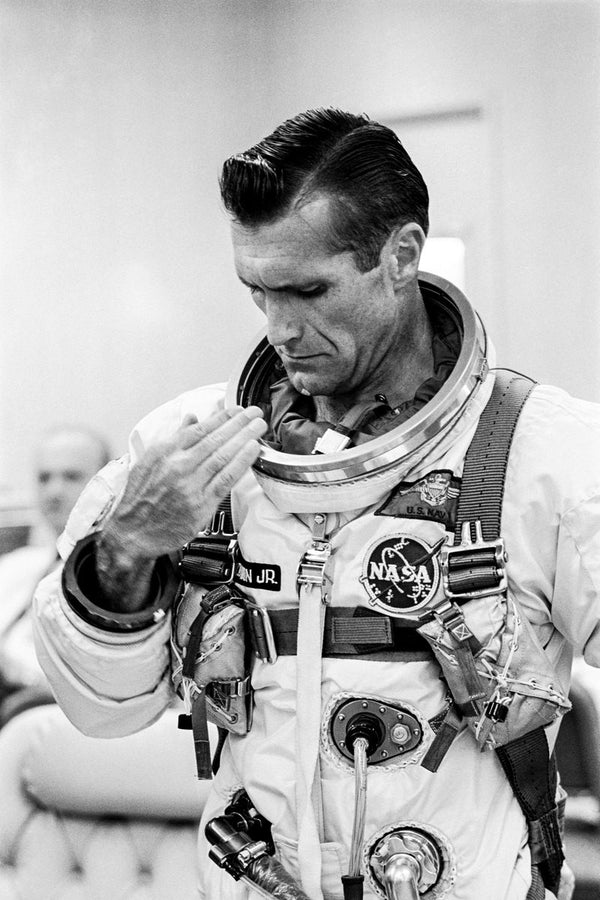
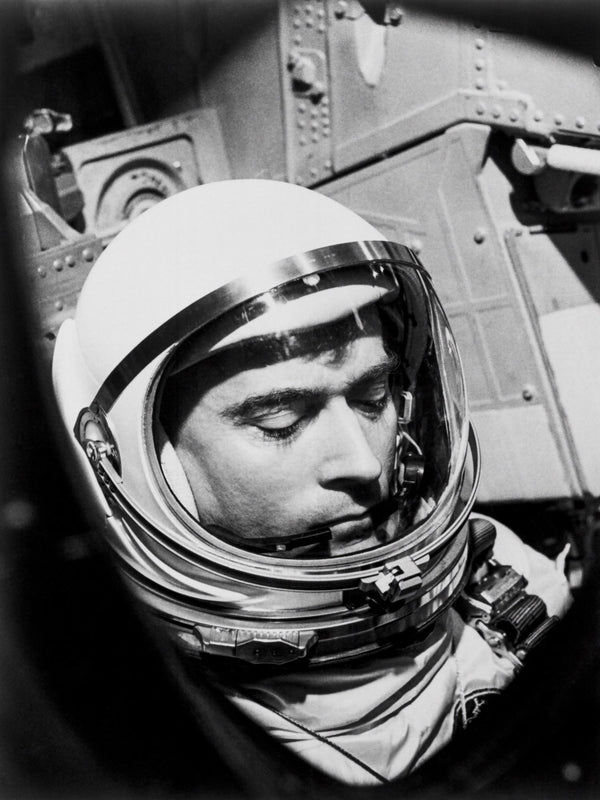
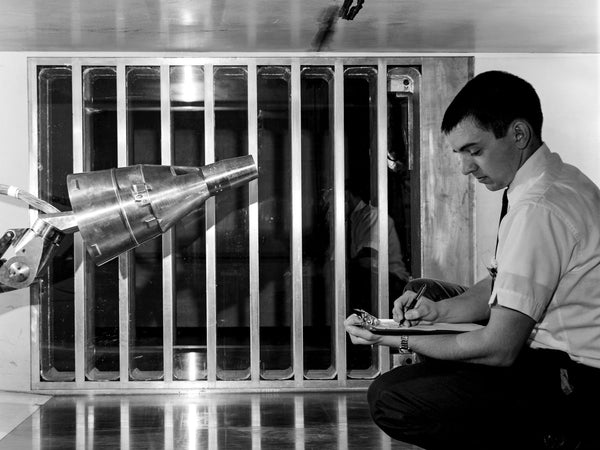
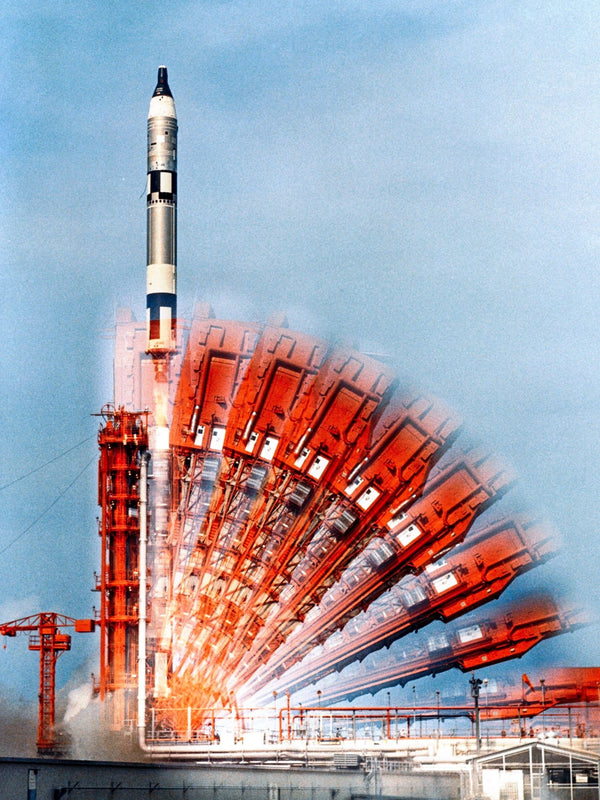
These prints run from a Gemini model in a Langley wind tunnel in 1962 and the first Titan II floodlit on its pad, to Ed White outside Gemini 4, the Agena target Gemini 8 docked with, and Buzz Aldrin’s spacewalk self portrait. In between are the deserts and seabeds the crews photographed from orbit, from the Sahara to the Bahamas, and the last splashdown of the programme, on 15 November 1966.