

Before spaceflight
Before spaceflight, 1840 to 1962: the Moon on a daguerreotype, the Sun’s red flames at an eclipse and a rocket plane flown faster than anyone had flown, then the first American satellite, the first photograph of Earth from a satellite and the work on the ground that set a course for the Moon.


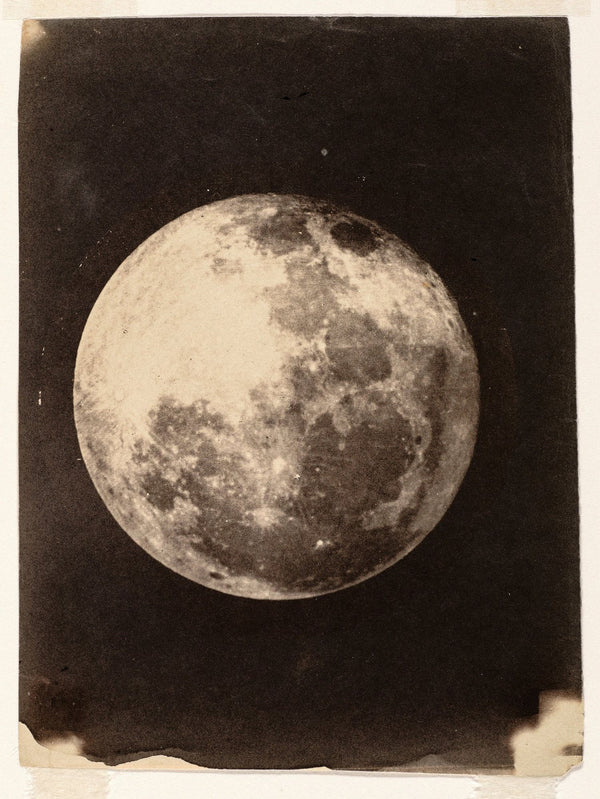


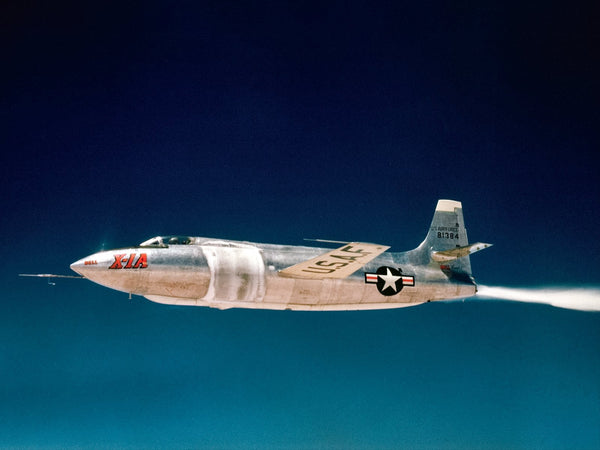

Before spaceflight, 1840 to 1962: the Moon on a daguerreotype, the Sun’s red flames at an eclipse and a rocket plane flown faster than anyone had flown, then the first American satellite, the first photograph of Earth from a satellite and the work on the ground that set a course for the Moon.
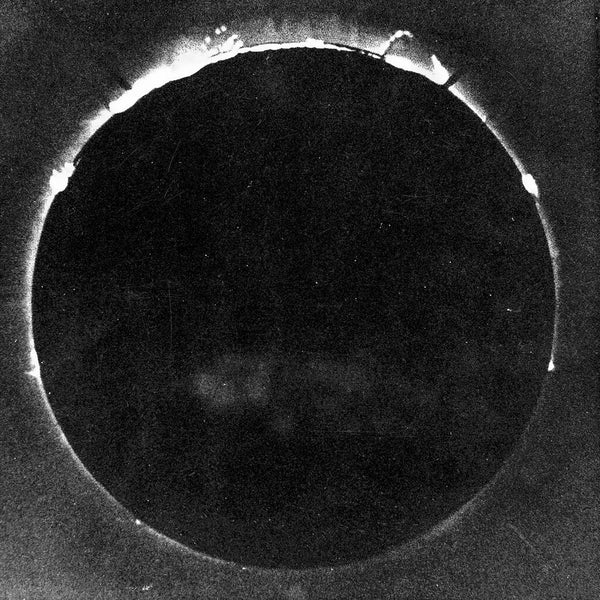
These are the photographs that came before the astronauts flew, and the years when NASA was new. John William Draper made the oldest surviving photograph of the Moon from a New York rooftop on 26 March 1840. Photographs of the total eclipse of 18 July 1860, made at two sites in Spain, showed that the red flames at the Sun’s edge belong to the Sun itself. Explorer 1, the first American satellite, went up on 31 January 1958, eight months before NASA opened on 1 October, and in August 1959 Explorer 6 sent back the first photograph of Earth made from a satellite. The collection also holds the first Saturn I on its pad at Cape Canaveral in 1961, John Houbolt at the blackboard where he argued for lunar orbit rendezvous, and Katherine Johnson at work at Langley in 1962.